



PAM Custom Formulation Instructions
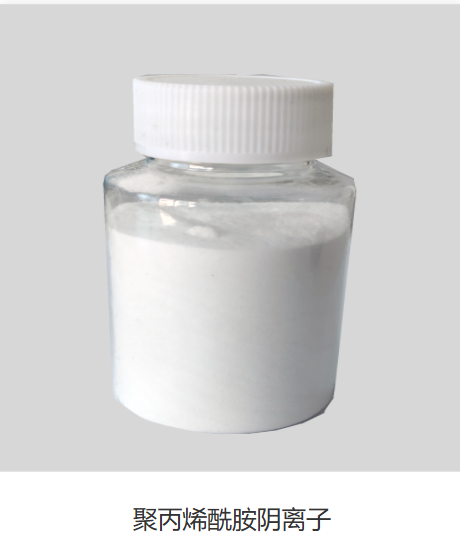
1.Product Overview PAM Anion (Nonionic), formally known as polyacrylamide, is a water-soluble high-molecular-weight polymer and a key component in the polyacrylamide (PAM) product series. Its molecular chains carry negatively charged groups (such as carboxyl groups), which neutralize positive charges on suspended particle surfaces and utilize their long molecular chains for "adsorption bridging" to flocculate waterborne micro-particles into large, dense flocs. The solid-liquid separation is ultimately achieved through sedimentation or filtration.
2. Product Form Appearance: White or slightly yellow granules/powder.
Ionicity: Typically ranges from 10% to 40%, which can be selected based on different application scenarios.
Molecular weight: Typically ranges from medium to ultra-high (2 million to over 20 million). Higher molecular weights indicate longer chain lengths and stronger bridging capabilities.
3. Key Features High-efficiency flocculation: Demonstrates excellent flocculation performance for positively charged suspended particles.
Low dosage with remarkable efficacy: A small amount is sufficient to achieve optimal solid-liquid separation.
Thickening effect: Significantly increases the viscosity of aqueous solutions.
PH has a wide range of applicability: it exhibits optimal efficacy under slightly neutral to alkaline conditions.
Synergistic enhancement with inorganic flocculants: Often combined with polyaluminum chloride (PAC) to form larger flocs, thereby increasing sedimentation velocity.
4. Main application fields: Wastewater treatment: Industrial wastewater treatment: Widely used in industries such as steelmaking, electroplating, metallurgy, coal washing, and textile dyeing, particularly effective for treating wastewater containing high concentrations of inorganic substances (e.g., metal hydroxides).
Urban domestic wastewater: used for primary sedimentation tanks and sludge dewatering.
Sludge dewatering: As a sludge conditioning agent, sludge dewatering is performed using centrifuges, belt filter presses, or plate and frame filter presses to effectively reduce the moisture content of sludge.
Mineral processing: In the mineral processing industry, it is used for pulp concentration and tailings sedimentation clarification, promoting the recovery of valuable minerals and water recycling.
River sand washing/sand and gravel plant: Used for rapid clarification of sand washing wastewater to enable water reuse and sludge sedimentation.
Related products

![[Bundle of 2] Olay Regenerist Day Cream and Retinol 24 Night Cream](https://www.allshop.net.cn/public/download/p/44a715343d346cfa7a0237fa0536ab5b.jpg)